NBA 2K27 leak gives modders an early look at Nvidia’s DLSS 5
A 158 MB neural-rendering library found in the game’s PC build has already been transplanted into Control and other titles, but the results are unofficial and costly.


Takeaways by Learning The World AI Show Hide
- NBA 2K27’s PC build included a 158 MB Nvidia DLSS Neural Rendering library that Nvidia has not announced as a supported feature for the game.
- Modders transplanted the unfinished runtime into Control and other games, with one RTX 5070 Ti test falling from 71 fps to 35 fps at 4K.
- The leak previews Nvidia’s autumn-bound DLSS 5 technology, but it does not establish final image quality, performance or support for older RTX cards.
AI-generated from this article and reviewed by the editor.
Nvidia did not launch DLSS 5 this week. A PC build of NBA 2K27 appears to have exposed part of it early.
VideoCardz reported that the game’s early-access build included a file identified by Windows as Nvidia DLSS Neural Rendering: nvngx_dlssnr.dll, version 310.8.0.0. The 158 MB library is dated 26 August and is roughly three times the size of a typical DLSS 4 Super Resolution file.
TechPowerUp’s analysis found that about 140.9 MB of the file consisted of model weights, pointing to an FP8 network with roughly 148 million parameters. That makes the leak more than a stray label: it appears to contain a working, if unfinished, version of the neural-rendering model Nvidia announced in March.
There is no DLSS 5 switch in NBA 2K27, and Nvidia has not listed the game among its supported titles. The library may have been included for internal testing or by mistake. Either way, its presence gave modders something they could transplant into games that were never built to use it.
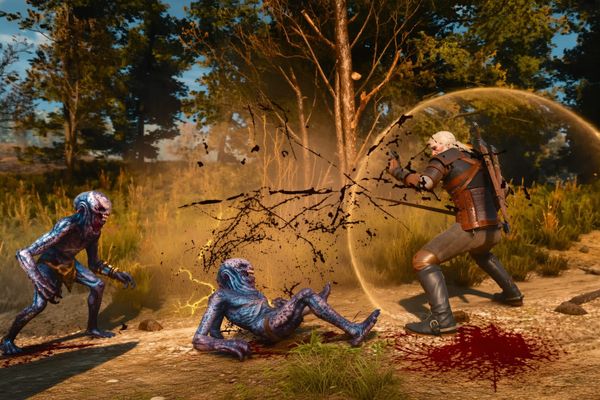
RenoDX modder SpeedLemur has already released a Control add-on on Nexus Mods that invokes the leaked library through ReShade. The modification requires ray tracing and DLSS to be enabled and exposes several controls for the strength and style of the effect. Other experimenters have since shown the runtime operating in games including Skyrim, Grand Theft Auto V and Final Fantasy VII Rebirth.
The early results demonstrate the technology, but they also underline how far it is from a shipping product. In one test reported by Tom’s Hardware, an RTX 5070 Ti running Control at 4K fell from 71 frames per second to 35 when the filter was enabled. The model is being added late in the rendering pipeline through a community workaround, not integrated and optimised by a game developer.
Modders have also patched the leaked code to run on at least one RTX 40-series card. That is an interesting technical result, but it does not establish that Nvidia will support older hardware when DLSS 5 launches.
Nvidia describes DLSS 5 as a real-time neural-rendering system rather than another upscaler. It uses a frame’s colour and motion data to alter lighting, materials and fine surface detail. The company says developers will be able to control the model’s intensity, colour grading and masks so that it can be applied selectively rather than rewriting an entire scene.
Those controls matter because the unofficial comparisons are inconsistent. The filter can add convincing skin, fabric and shadow detail to one frame while making another look waxy, over-aged or detached from the game’s art direction. Nvidia’s SIGGRAPH presentation described three available models, per-object controls and a distilled version designed to run on a single GPU. None of that makes a ReShade experiment an accurate preview of how a finished game will look.
Nvidia says DLSS 5 is due this autumn and has named games including Assassin’s Creed Shadows, Hogwarts Legacy, Resident Evil Requiem, Starfield and The Elder Scrolls IV: Oblivion Remastered among the planned adopters. NBA 2K27 is not on the list.
The leak therefore offers an early look, not a review. It shows that Nvidia’s neural-rendering model is compact enough to travel inside a game build and flexible enough for modders to make it run elsewhere. The harder question is whether Nvidia and developers can reduce its performance cost while preserving the choices that make each game look like itself.
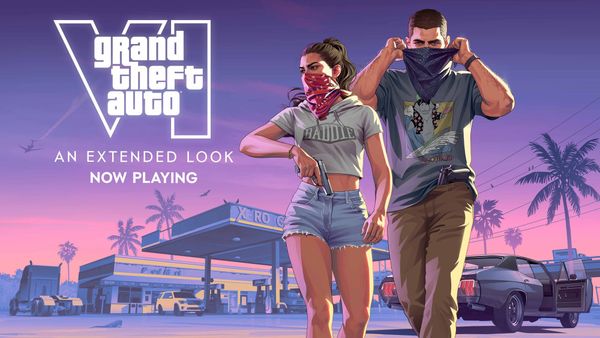
No es GTA 6. Es The Last of Us 2 con DLSS 5 filtrado. Los modders lo metieron en todo en un día y ahora Abby se ve más cara que Vice City. ¿Sigue siendo “next gen” o ya nos acostumbramos a menos? pic.twitter.com/szcErA7r08
— Pietre (@Pietreixq) August 28, 2026
DLSS 5 just leaked and ... Yeah ... 🤮
— Kaizen ✦ 3D Artist 🎨 (@Kaizen_3D) August 28, 2026
All artistic intent is gone. It looks so uncanny and gross. pic.twitter.com/PHYDWwaMSc